
- (864) 365-3750
- drjgreen@bellsouth.net
- 1109 S Church ST Greenville SC 29605
Anxiety affects the way the brain processes information, responds to stressors, and interprets everyday experiences. For many individuals, anxiety becomes a persistent pattern that influences focus, sleep, decision-making, and emotional steadiness. Neurofeedback for anxiety offers a noninvasive method that teaches the brain to shift toward calmer, more regulated activity. By providing real-time feedback on brainwave patterns, the training helps reinforce healthier responses that support clarity and resilience.
As interest grows in approaches that address anxiety at the neurological level, neurofeedback therapy has become a valuable option for those seeking support alongside traditional treatment or for those who want a method rooted in brain-based learning. Here we explain how neurofeedback relates to anxiety symptoms, how training works, and what current evidence suggests about its effectiveness.
These symptoms often reflect patterns within networks responsible for managing internal signals. When these networks remain in a heightened state, individuals may feel tense or unsettled even without an external trigger.
Neurofeedback for anxiety targets these internal rhythms by showing the brain how its current patterns compare with more regulated states. Through repeated feedback, the brain practices returning to balanced activity. This process supports smoother communication between regions responsible for emotional stability and calm focus.
Understanding anxiety through this neurological lens helps individuals recognize that their symptoms are not character flaws, but patterns that can be trained and supported.
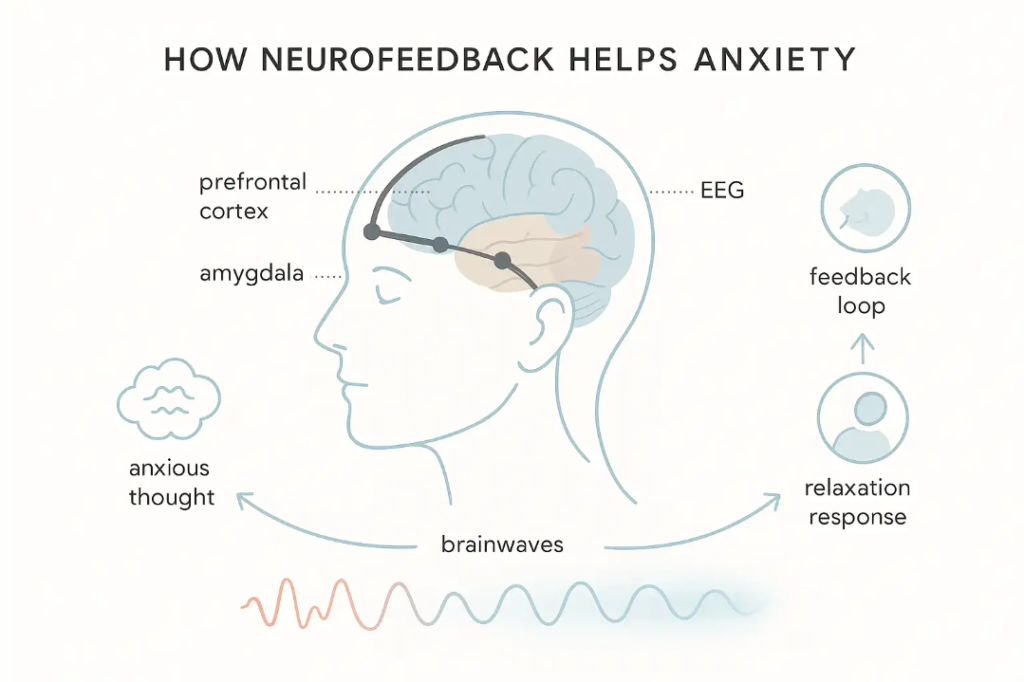
Neurofeedback training uses sensors placed on the scalp to measure electrical activity. These signals are translated into visual or auditory cues that shift depending on how the brain functions moment to moment. When the brain moves toward a desired pattern linked to calm or steady attention, the system provides positive feedback. Over time, the brain learns to access these patterns more easily.
This training is particularly helpful for anxiety because it encourages:
Neurofeedback is noninvasive, making it a practical option for individuals who want a gentle approach. There is no medication involved, and patients remain fully awake and engaged throughout the process. The brain learns through repetition, similar to how it learns other skills.
Sessions typically occur several times per week over a series of weeks. Consistency gives the brain the opportunity to create new habits that support long-term improvements.
Different neurofeedback methods are used to address anxiety, each with unique features that target underlying brainwave activity.
Some protocols emphasize alpha rhythms, which are linked to calm focus. Adjusting connectivity patterns may help the brain shift away from states that maintain worry or hyperarousal.
qEEG brain assessments provide a detailed map of the brain’s activity. This helps clinicians identify irregular patterns that may contribute to anxiety and tailor neurofeedback protocols more precisely.
Recent evidence-based guidelines suggest that neurofeedback can reduce anxiety when training is repeated consistently and tailored to the individual. Studies, including randomized controlled trials, highlight improvements in anxiety symptoms, emotional steadiness, and overall well-being.
These methods work together to teach the brain how to return to regulated states, supporting mental clarity and resilience.
Individuals participating in neurofeedback training for anxiety often appreciate the calm, structured nature of the sessions. A typical appointment includes:
Patients do not need to perform difficult tasks. Instead, they watch or listen as the system reflects their brain activity. The training process encourages the brain to shift toward healthier patterns without requiring conscious effort.
Over time, many individuals notice:
The training can support individuals with generalized anxiety, social anxiety, stress-related concerns, or anxiety linked to other conditions such as PTSD or depression. Because neurofeedback addresses the neurological dimension of symptoms, it fits naturally within collaborative treatment plans. Clinicians may adjust protocols throughout the process to align with changes observed in brainwave activity and self-reported progress.
Research on neurofeedback for anxiety continues to expand, with studies exploring how brain-based training influences mood and stress responses. Findings across small trials, case studies, and broader analyses point toward meaningful improvements in:
Some studies highlight that neurofeedback training improves anxiety traits over several weeks of consistent sessions. Others note reductions in physical symptoms of anxiety, such as restlessness or tension.
Real-world experiences often mirror these trends. Individuals frequently describe:
These results align with research suggesting that repeated neurofeedback sessions encourage the brain to adopt steadier patterns that can carry over into everyday life.
While responses vary, the growing body of evidence indicates that neurofeedback is a promising tool for individuals seeking additional support beyond traditional anxiety treatments.
Neurofeedback for anxiety offers a noninvasive method of teaching the brain to regulate patterns linked to stress and worry. Through consistent feedback and repetition, individuals can develop greater emotional balance and clearer thinking. While not a replacement for traditional anxiety treatment, neurofeedback can serve as a helpful addition to a broader care plan.
If you want to understand how neurofeedback may support your goals, Carolina Hyperbaric and Wellness can provide assessments and guidance to help you make an informed decision. Their team offers a supportive environment where you can learn how training fits alongside other treatments and how it may contribute to long-term well-being.
therapy, coping, anxiety, behavior, stress, couples therapy, insurance, mental health, mental health professional, medication, health, dialectical behavior therapy, psychology, panic, humana, exposure therapy, emotion, panic attack, attention deficit hyperactivity disorder, worry, borderline personality disorder, insomnia, psychiatry, anger management, counseling, mental health clinic, treatment, depression counseling, therapist, grief, panic disorder, fear, quality of life, personality disorder, confidence, bipolar disorder, insight, stress management, oppositional defiant disorder, social anxiety, social anxiety disorder, motivation, perfectionism, anger, suicidal ideation, fatigue, christian counseling, clinic, shortness of breath, awareness, divorce, distress tolerance, agoraphobia, mood, feeling, understanding, shame, mental, depression, helping, disorders, practice, emotional, mental state, compassion, patient, disease, neurofeedback, major depressive disorder, sleep, cognition, biofeedback, frontal lobe, heart rate, feedback, generalized anxiety disorder, meditation, memory, stimulant, exercise, research, blood pressure, nervous system, heart rate variability, adrenaline, muscle, medicine, cortisol, racing thoughts, systematic review, stress hormone, mind, dementia, waves, body, patients, attention, headache, electroencephalography, chronic, pressure, palpitations, epilepsy, addiction, seizure, illness, mental health conditions, evidence