
Depression affects how the brain processes emotion, stress, and daily experiences. Many individuals with mild, moderate, or recurring depressive symptoms describe feeling stuck in patterns that are difficult to shift through traditional strategies alone. Neurofeedback for depression offers a method of guiding the brain toward steadier activity by providing real-time information about its electrical signals. This approach appeals to individuals interested in understanding their mood at the neurological level and seeking additional support while working within a broader treatment plan.
Neurofeedback does not replace established care for depression. Instead, it gives the brain repeated practice in regulating activity linked with mood, attention, and emotional stability. This overview outlines how neurofeedback relates to depressive symptoms, how different neurofeedback interventions work, and what current research suggests about its use alongside other treatments.
Depression involves changes in several networks of the brain, including those associated with motivation, focus, and emotional processing. Studies suggest that communication between the prefrontal cortex, amygdala, and limbic system may become less efficient, making it harder to manage stress or shift out of negative thought cycles. Individuals may experience:
These internal patterns often reinforce each other, creating a loop that affects daily functioning. Neurofeedback for depression targets these patterns by showing the brain where activity may be dysregulated and reinforcing more stable responses.
By focusing on the neurological signals connected to mood and stress response, neurofeedback gives individuals an opportunity to train parts of the brain involved in emotional regulation. Over time, this training supports smoother activity between networks that influence mood.
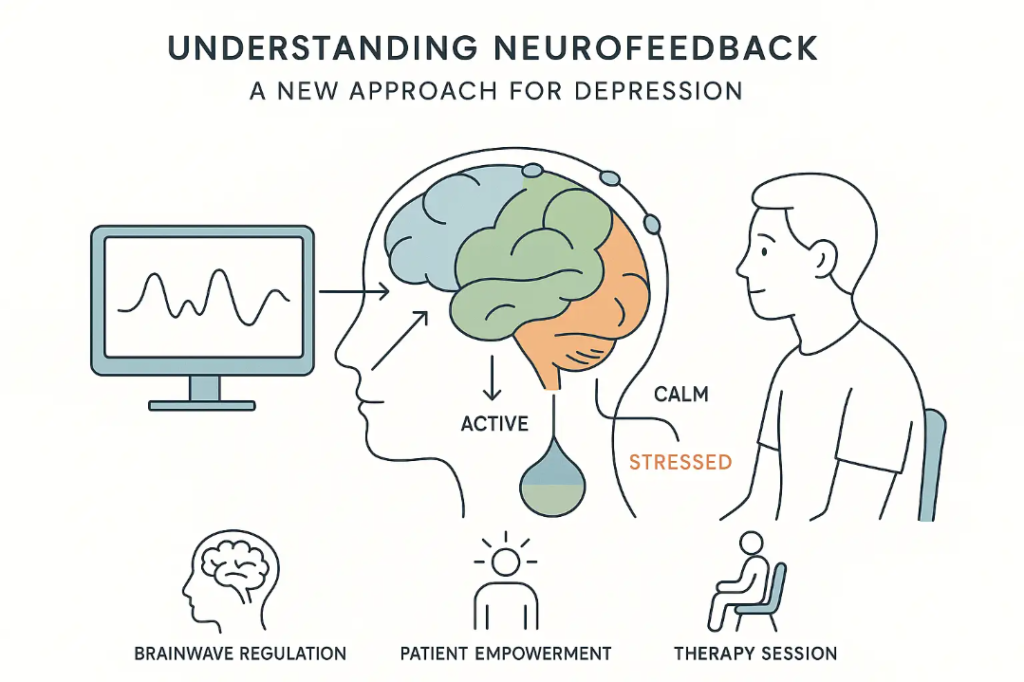
Neurofeedback training uses sensors placed on the scalp to measure electrical activity. The system converts this activity into visual or audio cues that act as immediate feedback. When the brain moves toward a balanced pattern associated with improved regulation, the feedback responds. With repetition, the brain learns to recognize and return to these patterns.
For depression, this approach is beneficial because emotional regulation difficulties are often linked to inconsistent neural communication. Neurofeedback interventions help strengthen signals that support steadier mood responses.
Benefits individuals commonly report include:
Training sessions do not require individuals to perform difficult tasks. The brain learns through feedback, making the process suitable for adults, teens, and older adults navigating depressive symptoms.
Neurofeedback training is frequently combined with therapy, lifestyle strategies, or medication. The goal is to support the brain from several angles while maintaining consistent care.
Several types of neurofeedback interventions have been studied for their effects on depression. The most well-known include EEG neurofeedback and fMRI-based neurofeedback. Each method uses different forms of information to help the brain adjust its patterns.
EEG neurofeedback focuses on electrical activity measured at the scalp. It has been studied in individuals experiencing depressive symptoms and has shown potential for improving regulation, attention, and mood. Training may target patterns associated with rumination or low motivation, helping establish more functional rhythms.
fMRI neurofeedback measures changes in blood flow linked to activity in specific regions of the brain. Some studies have examined how this method can influence areas tied to emotion, such as the amygdala. fMRI-based neurofeedback gives individuals insight into how their brain responds during emotional tasks and helps reinforce healthier connectivity.
Neurofeedback protocols differ based on each patient’s symptoms, assessment results, and overall goals. Some protocols aim to calm overactive regions, while others aim to support underactive networks. Clinicians may adjust the training direction as the brain adapts, making the process highly individualized.
These approaches are continually studied for their potential to support major depressive presentations, persistent depressive disorder, and mood fluctuations. While responses vary, research continues to show encouraging outcomes for many patients.
A growing body of research has examined how neurofeedback may influence depression. Studies involving EEG-based protocols and fMRI neurofeedback have documented improvements in areas such as:
Reviews of neurofeedback studies note that repeated training sessions may support the brain’s ability to return to more regulated patterns. Some findings show changes in connectivity within networks tied to mood regulation, particularly those involving the prefrontal cortex and limbic structures.
These results are promising, yet researchers continue to evaluate how specific neurofeedback protocol designs influence depressive symptoms and how long improvements may last. Many clinicians now view neurofeedback for depression as a supportive tool that complements a wider care plan rather than a standalone treatment.
When individuals understand both the potential benefits and the limitations of current research, they are better prepared to decide whether neurofeedback aligns with their treatment goals.
Depression is multifaceted, so treatment plans often benefit from a coordinated approach. Neurofeedback can fit alongside therapy, medication, behavioral strategies, and lifestyle adjustments to support different aspects of recovery.
Examples of how neurofeedback supports broader care include:
A collaborative care model helps ensure that neurofeedback interventions complement other forms of treatment. Providers may adjust neurofeedback protocols based on feedback from therapists, psychiatrists, or primary care clinicians.
Integrating neurofeedback into an established care plan allows individuals to address both neurological and psychological contributors to depression.
Neurofeedback for depression offers a structured way to train brain activity related to mood and emotional steadiness. By using real-time feedback, the brain practices returning to more stable patterns that may support better daily functioning. Although not a replacement for traditional treatment, neurofeedback can serve as a valuable part of a wider care plan. If you want to understand how neurofeedback may support your goals, Carolina Hyperbaric and Wellness can provide assessments, information, and guidance on available training options. Their team can help you evaluate whether this method fits into your current treatment plan and how it may contribute to improved well-being.
therapy, neurofeedback, medication, psychiatry, mental health, neurofeedback for depression, mental disorder, electroencephalography, major depressive disorder, anxiety, patient, research, attention deficit hyperactivity disorder, mood, emotion, cognition, biofeedback, systematic review, amygdala, insurance, prefrontal cortex, randomized controlled trial, frontal lobe, sleep, clinical trial, neuroscience, dorsolateral prefrontal cortex, feedback, antidepressant, stress, remission, suicidal ideation, neuroimaging, brain training, depression, treat, treatment, alpha wave, motivation, memory, electroconvulsive therapy, seizure, neuroplasticity, evidence, neuromodulation, efficacy, psychophysiology, exercise, depression and neurofeedback, depression neurofeedback treatment, behavior, health, brain, disease, methodology, headache, experience, stimulant, prevalence, cognitive neuroscience, schizophrenia, mental state, scalp, open access, bipolar disorder, attention, intervention, treat depression, treating depression, patients, studies, tms, nervous system, positive feedback, regulation, meditation, mental health professional, master of social work, substance abuse, social work, dialectical behavior therapy, grief, psychology, safe space, coping, pain, anger management, health insurance, borderline personality disorder, community, art therapy, counseling, treatments, absolute total care, therapist, anger, developmental psychology, hope, gender identity, personality disorder, space, optum, confidence, gender, addiction, compassion, quality of life, exposure therapy, insight, adoption, oppositional defiant disorder, social anxiety, neurodiversity, empathy, insomnia, creativity, christian counseling, understanding, divorce, alcohol, shame, postpartum depression, parent, medicaid, psychological testing, clinic, veteran, healing, healing journey, mental, therapy work, therapeutic, panic, language, psychosis, health care, master of arts
neurofeedback training depression, neuro focused therapy for mood disorders, neurofeedback protocol for depression