- (864) 365-3750
- drjgreen@bellsouth.net
- 1109 S Church ST Greenville SC 29605
Hyperbaric oxygen therapy, often called HBOT, has become a popular oxygen therapy option in wellness centers, med spas, chiropractic offices, and at-home recovery setups. Interest has grown as more people look for non-medical ways to support healing, athletic recovery, and day-to-day wellness routines. The common question, “is hyperbaric oxygen therapy effective,” usually comes from people who want to understand what HBOT does, what results are realistic, and how much depends on the chamber, the protocol, and the person using it.
Effectiveness in wellness settings is best understood as a combination of how hyperbaric oxygen works in the body, how consistently sessions are used, and whether the person has a clear goal such as recovery time support, stress load management, post-training recovery, or comfort after demanding physical routines. Non-medical HBOT is different from hospital-based hyperbaric medicine, and outcomes should be framed in a way that fits that difference.
HBOT uses a hyperbaric chamber to raise atmospheric pressure while oxygen levels are increased. Under these conditions, the body can absorb higher amounts of oxygen than it can at normal pressure. Hyperbaric oxygen dissolves into plasma, which helps increase oxygen delivery to tissues, including areas with reduced blood flow due to injury or inflammation.
This mechanism is one reason people associate HBOT with recovery time support. Oxygen plays a role in tissue repair, immune response, and energy production at the cellular level. The source also notes that research and observation have connected regular hyperbaric oxygen exposure with changes related to cellular regeneration, growth of new blood vessels, and inflammatory modulation.
Those mechanisms help explain why some people report benefits tied to athletic recovery, energy, and overall wellness routines. Selectable ATA levels are commonly ranging from 1.3 to 2.0 ATA, with select hard-shell models available at higher pressures, giving users flexibility based on comfort, experience, and intended use. This is also where safe protocols and guidance matter, since pressure and oxygen exposure can affect how someone feels during and after a session.
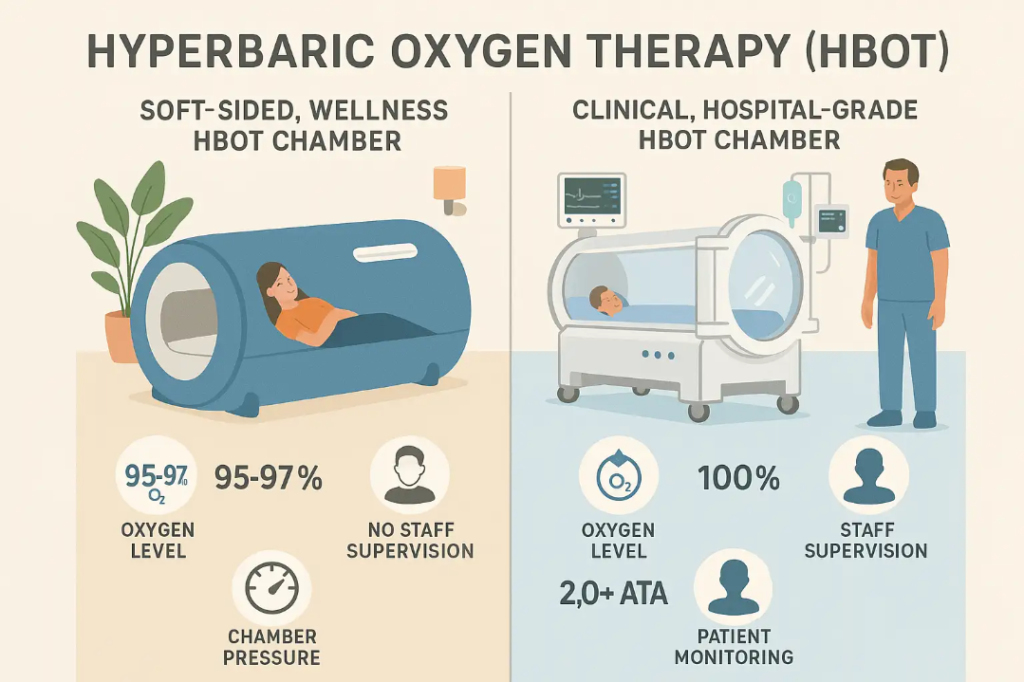
When people ask whether hyperbaric oxygen therapy is effective, they are often looking for a simple yes or no. In practice, effectiveness depends on the goal and the context. Hospital-based hyperbaric medicine is used for specific approved indications under clinical oversight, while non-medical hyperbaric therapy is generally used as wellness support. The source highlights that non-medical HBOT allows everyday users to access oxygen therapy in a controlled, user-friendly environment without the same barriers and costs tied to hospital visits.
In wellness settings, “effective treatment” often means it supports a person’s plan for recovery, resilience, and performance habits. People commonly seek oxygen treatment to support comfort after heavy training, improve how they feel day to day, and create a consistent recovery routine. Reported outcomes among bio-hackers and wellness-focused users include improved energy, sharper mental clarity, and smoother recovery timelines, while framing these as commonly reported experiences rather than fixed promises.
Consistency is a major variable. A person who receives HBOT sporadically may not notice the same changes as someone who follows a steady schedule. People also respond differently based on baseline health, sleep patterns, stress, training load, and existing conditions. A healthcare provider can help someone determine whether oxygen therapy makes sense as part of their care plan, especially when there is a medical history that affects oxygen tolerance.
The “science behind hyperbaric oxygen” matters because it grounds expectations. Research and clinical observation indicate that hyperbaric oxygen can stimulate repair-related processes through improved oxygen saturation in blood and tissues, and by supporting mechanisms tied to inflammation and oxidative stress.
At the same time, not every wellness claim is supported equally across all conditions. People searching terms like “success rate” often want a single percentage, but outcomes vary based on the individual, the severity of the issue being addressed, and the protocol used. In non-medical settings, it is most accurate to describe HBOT as a supportive tool that may help certain wellness goals, rather than promising uniform results.
A responsible approach also includes acknowledging the medical landscape. Some people wonder why doctors may hesitate to recommend HBOT broadly. Often, that comes down to differences in regulatory pathways, approved indications, evidence standards, and insurance reimbursement. When a person has a condition that requires medical evaluation, the right step is to involve a healthcare provider and treat HBOT as a possible adjunct rather than a replacement for medical care.
HBOT has become especially popular among bio-hackers and athletes who want structured recovery routines. There is growing use for performance-focused goals such as post-exercise recovery, reduced inflammation, improved mental clarity, and support for sleep routines. In wellness clinics, hyperbaric oxygen is often added as a service because clients actively seek non-invasive recovery support.
Use cases vary widely across settings. A med spa may position hyperbaric therapy as a recovery add-on for clients who want comfort and downtime support after demanding services. A chiropractic office may position oxygen therapy as part of an overall wellness plan focused on recovery and consistency. Home users often prioritize convenience, privacy, and the ability to fit sessions into work and family schedules.
For those searching for hyperbaric oxygen therapy, it helps to confirm whether a location offers medical hyperbaric medicine or non-medical hyperbaric chambers. That distinction changes how sessions are administered, how protocols are discussed, and what outcomes are appropriate to claim.
Chamber selection plays a major role in user experience and practical results. HBOT Revolution’s lineup of soft-shell and hard-shell hyperbaric chambers are designed for wellness centers and home users, with pressure options ranging from 1.3 to 2.0 ATA, with select hard-shell models available at higher pressures. Soft-shell models are often chosen for home settings where flexibility matters. Hard-shell models are often selected by clinics that need durability and higher utilization.
User comfort matters as much as the technical features. Many people notice ear pressure similar to altitude changes during the pressurization phase. The source notes that users may experience ear fullness or popping as the body adjusts, which is usually manageable in lower-pressure, non-medical chambers. Some people also notice temporary lightheadedness, mild sinus pressure, or fatigue as the body adapts to increased oxygen exposure.
Safety starts with a realistic plan. People should communicate any concerns and medical history with a healthcare provider, especially if there are respiratory issues, ear or sinus conditions, or other factors that affect pressure tolerance. Proper guidance helps align oxygen therapy with a person’s needs and reduces avoidable discomfort.
For readers evaluating whether hyperbaric oxygen therapy is effective in a non-medical wellness setting, Carolina Hyperbaric and Wellness offers structured hyperbaric oxygen therapy in a dedicated clinic environment. Their services emphasize education, consistency, and a supportive experience for individuals exploring HBOT as part of a broader wellness routine.
therapy, disease, patient, blood, tissue, oxygen, injury, medicine, oxygen therapy, blood vessel, decompression sickness, carbon monoxide, burn, insurance, water, side effect, bone, cell, breathing, diabetic foot, pneumothorax, edema, health, atmospheric pressure, hypoxia, lung, middle ear, necrosis, immune system, monoxide, treatment, chamber, food and drug administration, oxygen toxicity, surgery, bubble, seizure, osteomyelitis, cancer, claustrophobia, eardrum, brain, embolism, flap, brain abscess, undersea and hyperbaric medical society, bacteria, bleeding, organ, clinic, soft tissue, foot, blood pressure, primary care, barotrauma, stem cell, medicare, pregnancy, emergency medical technician, emergency department, abscess, skin care, artery, scuba diving, inflammation, crush injury, growth factor, complication, fluid, covid, healthcare provider, medical, healthcare, hbot, center, hyperbaric, patients, occupational medicine, central retinal artery occlusion, cyanide poisoning, medication, wound, skin, ear, radiation therapy, carbon, underwater diving, pain, sleep, information, healing, heart failure, health care provider, fever, radical, pressure, provider, headache, neuroplasticity, randomized controlled trial, fatigue, research, stress, clinical trial, cognition, efficacy, oxidative stress, synapse, synaptic plasticity, nervous system, central nervous system, neurology, angiogenesis, vascular endothelial growth factor, quality of life, ageing, anxiety, memory, creative commons license, systematic review, neurocognition, open access, executive functions, placebo, creative commons, protein, inflammatory cytokine, drug, cytokine, bone marrow, mitochondrial biogenesis, redox, mechanism of action, cellular senescence, attention, aging, perfusion, receptor, cardiovascular disease, biology, energy